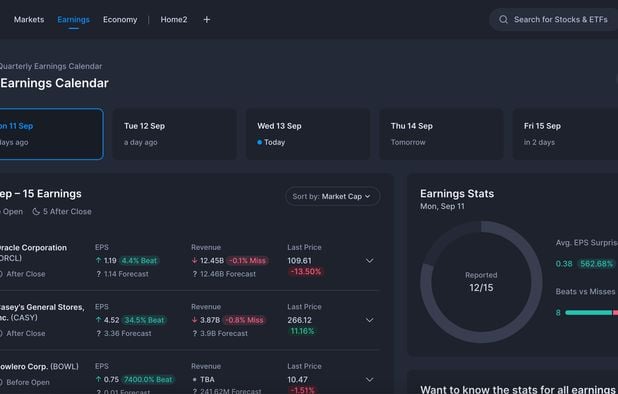
Market coverage plays an important role in evaluating AI stock-predicting/analyzing trading platform because it affects the access you have to a broad range of assets and financial markets. A platform that has comprehensive market coverage will allow you to diversify portfolios and explore opportunities for global trading, and adjust to different strategies. These are the top 10 suggestions to evaluate the market coverage of these platforms:
1. Evaluate Supported Asset Classes
Stocks - Ensure that you have access to major stock exchanges, such as NYSE and NASDAQ. Also, ensure that your platform has small-caps and mid-caps.
ETFs: Make sure the platform can support a broad range of ETFs for diversified exposure to regions, sectors, or themes.
Futures and options: Determine whether the platform supports derivatives, such as futures, options and other leveraged instruments.
The commodities and forex. Find out if the platform offers forex pairs, precious and base metals, energy products, and agricultural products.
Cryptocurrencies - Check to see if your platform supports the major cryptocurrencies like Bitcoin, Ethereum and altcoins.
2. Check for Geographic Coverage
Global markets: Make sure that the platform covers all major global markets, which include North America, Europe, Asia-Pacific and emerging markets.
Regional focus: Check if the platform is focused on specific regions or market segments that match your trading preferences.
Local exchanges - Check to see if there are local or regional exchanges available which are relevant to your area and your strategy.
3. Examine Real-Time vs. Delayed data
Real-time Market Data: The platform should provide real-time trading data to facilitate quick decision-making.
Delayed data - Check whether delayed data is available for free or is available at a reduced cost. This could be enough to investors who want to invest for the long run.
Data latency. Check to see whether your platform reduces the latency of real-time data feeds.
4. Review Historical Data Available
Historical data depth Make sure the platform provides ample historical data (e.g. 10, 10+ years) to backtest and analyze.
Check for any granularity. Historical data may include intraday, daily and weekly granularity.
Corporate actions: Examine to determine if the data has been recorded in the past. Dividends as well as stock splits and any other corporate actions should be included.
5. Check the market depth and the order book details
Level 2 data: Ensure that the platform has Level 2 information (order book depth) to facilitate price exploration and execution.
Spreads for bids: See if the platform displays real-time bid-ask spreads for exact price.
Volume data - Verify whether the platform provides detailed volume information for analyzing the market's activities and liquidity.
6. Assess Coverage of Indices and Sectors
Major indexes - Ensure that the platform is compatible with major indices such as S&P 500 and FTSE 100 for benchmarking.
Industry-specific data If you're looking to conduct a more specific analysis, see if there are any data available for specific sectors.
Custom indices. Check if you can build or monitor custom indices according to your own criteria.
7. Assess the impact of integration with News and Sentiment
News feeds - Ensure your platform is equipped with the most up-to-date market-driven news feeds (e.g. Bloomberg, Reuters).
Sentiment analysis: Check if the platform includes tools for analyzing sentiment based on social media, news or other sources of data.
Event-driven Strategies: Verify whether the platform supports strategies that are driven by events (e.g. economic reports or earnings announcements).
8. Verify Multi Market Trading Capabilities
Cross-market trading: Ensure the platform is able to trade across a variety of markets and asset classes through a single interface.
Currency conversion: Confirm that the platform supports multicurrency accounts and currency conversions to facilitate international trading.
Support for time zones: Check whether the trading platform is compatible with various time zones to trade on global markets.
9. Check the coverage of alternative sources
Alternative data: To get unique insights, check if the platform incorporates different sources of data.
ESG data - Verify that the platform offers environmental, governance, and social data (ESG). This is essential for a an investment that is socially conscious.
Macroeconomic Data: Make sure that the platform has macroeconomic indicators such as inflation, GDP and interest rates.
10. Review Market Feedback and User Reviews. Reputation
User reviews: Review the feedback of users to determine the platform's market coverage as well as its reliability and usability.
Reputation in the industry: Check if the platform has been recognized by industry experts in terms of market coverage.
Case studies: Check for case studies, testimonials, and other data that demonstrates the platform's effectiveness on specific markets or asset categories.
Bonus Tips
Trial period: You may make use of a demo, trial or free trial to evaluate the coverage of markets as well as the data quality.
API access: Ensure that the API of the platform permits you to access programmatically market data for custom analysis.
Support for customers: Ensure that the platform can help with any market-related queries or issues with data.
Utilizing these guidelines, it is possible to be able to accurately evaluate the coverage of AI software for stock prediction and analyzing trading platforms. Then, you can select a trading platform that offers you the market and the necessary information to be successful in your trades. Market coverage that is comprehensive will let you diversify, investigate options, and tailor your portfolio to changing market conditions. Read the most popular the advantage for ai for investment for blog tips including best ai stock trading bot free, trading ai, ai investing, trading ai, chatgpt copyright, market ai, ai stocks, ai trading tools, ai stocks, ai investing app and more.

Top 10 Tips For Assessing The Regulatory Compliance Of Ai Stock Analysing Trading Platforms
The regulatory compliance of trading platforms using AI to forecast or analyze stock prices is an important aspect. Compliance assures that a platform is in compliance to financial regulations and adheres to legal frameworks and protecting the user's information. This lowers the possibility of legal or financial concerns. These are the top ten tips for assessing regulatory compliance.
1. Verify the validity of your license and registration.
Regulators: Confirm that the website is registered and licensed by the relevant financial regulatory authority (e.g. SEC, FCA, ASIC, etc.) in your country.
Broker partnerships: Make sure that the brokers who are integrated into the platform are licensed.
Public records: Go to the site of the regulator to see if the platform has been registered or if it has been in violation of the law.
2. Compliance with the Data Privacy Evaluation
GDPR when operating in the EU or providing services to users there, the platform should comply with the General Data Protection Regulation.
CCPA : California Consumer Privacy Act (CCPA) conformity should be checked by the users.
Data handling policies. Examine the platform's privacy policies and ensure that it clearly outlines the manner in which user data is used to collect, share, and stored.
3. Evaluation of Anti-Money Laundering/AML measures
AML Policies The platform must have robust AML (Anti-Money Laundering) policies to detect the money laundering process and stop it from happening.
KYC procedures - Ensure that the platform complies with Know Your Customer procedures for verifying user identities.
Transaction monitoring: Verify that the platform monitors transactions in order to identify suspicious activity and notify authorities.
4. Verify compliance with Trading Regulations
Market manipulation: Ensure the platform has measures to prevent market manipulation, such as spoofing or wash trading.
Types of orders: Make sure that the platform adheres to the regulations regarding types of orders.
Best execution: Make sure that the platform adheres to the most efficient execution procedures to ensure that trades are executed at the most favorable price.
5. Examine Cybersecurity Security Compliance
Data encryption: Ensure that your platform is secure for data in the transfer process and in rest by encrypting it.
Incident response. Verify whether the platform has a strategy of action for handling cyberattacks and data breaches.
Certifications: Determine if the platform holds cybersecurity certifications (e.g., ISO 27001, SOC 2).
6. Transparency and disclosure A Review
Disclosure of fees. Be sure that all fees and charges are clearly disclosed, including any hidden charges or fees.
Risk disclosure: Make sure that the platform has clear risk disclosures, especially for leveraged or high-risk trading strategies.
Performance reporting: Make sure that the platform provides honest and precise reports regarding its AI models.
7. Check for conformity with international regulations.
Trading across borders. If you intend to do international trading, ensure that your platform adheres to the regulations in force.
Tax reporting: Check whether a platform offers tools or reports for users to adhere to tax laws.
Compliance with sanctions: Check that the platform complies with international sanctions and does not permit trading with prohibited entities or countries.
8. Assess Record-Keeping, Audit Trails
Transaction records: Ensure that the platform keeps accurate records of all transactions to be used for audits and regulatory purposes.
Recordings of user activity: Check whether the platform is recording user activity including logins or trades, as well as any modifications to account settings.
Audit-readiness: Check if the platform will be capable of generating all the required documents and logs to support the possibility of a regulatory audit.
9. Examine the compliance of AI Specific Regulations
Algorithmic rules of trading: If a platform supports the use of algorithms, it must conform to European regulations such as MiFID II and U.S. Reg SCI.
Fairness and bias: Determine whether the platform modifies or monitors its AI models to ensure fair and ethical trading.
Explainability: Certain regulations require that AI platforms give explanations for AI-driven decisions or predictions.
Examine the User's Feedback and Regulatory Histories
User reviews: Make use of user feedback to determine the platform's compliance with regulations.
Check the regulatory history to see if there were any penalties or fines imposed for infractions of regulations.
Third-party audits: Check whether the platform is subject to regular audits by a third party to ensure compliance with regulations.
Bonus Tips
Legal consultation: Talk to an expert on the subject to determine if your platform is compliant with regulations.
Trial period for free: You can use a demo or free trial to try out the compliance features of the platform as well as its documentation.
Customer support - Check that the platform is able to assist with any compliance related concerns or questions.
These guidelines will allow you to evaluate the legality of AI trading platforms which predict/analyze stock prices. So you can select a platform that operates within legal frameworks, and protects you. Compliance is important since it not only reduces legal risks, but builds trust and confidence in the platform. Have a look at the recommended stocks ai for site info including best ai stocks to buy now, how to use ai for stock trading, ai stock analysis, ai tools for trading, stock trading ai, best ai trading platform, ai share trading, ai stock predictions, best ai penny stocks, trading ai tool and more.